
Insights
Ocean View Parcel Assessment in Costa Rica
An ocean view parcel assessment reveals what a Costa Rica homesite can truly support, from access and utilities to privacy, permits, and resale value.
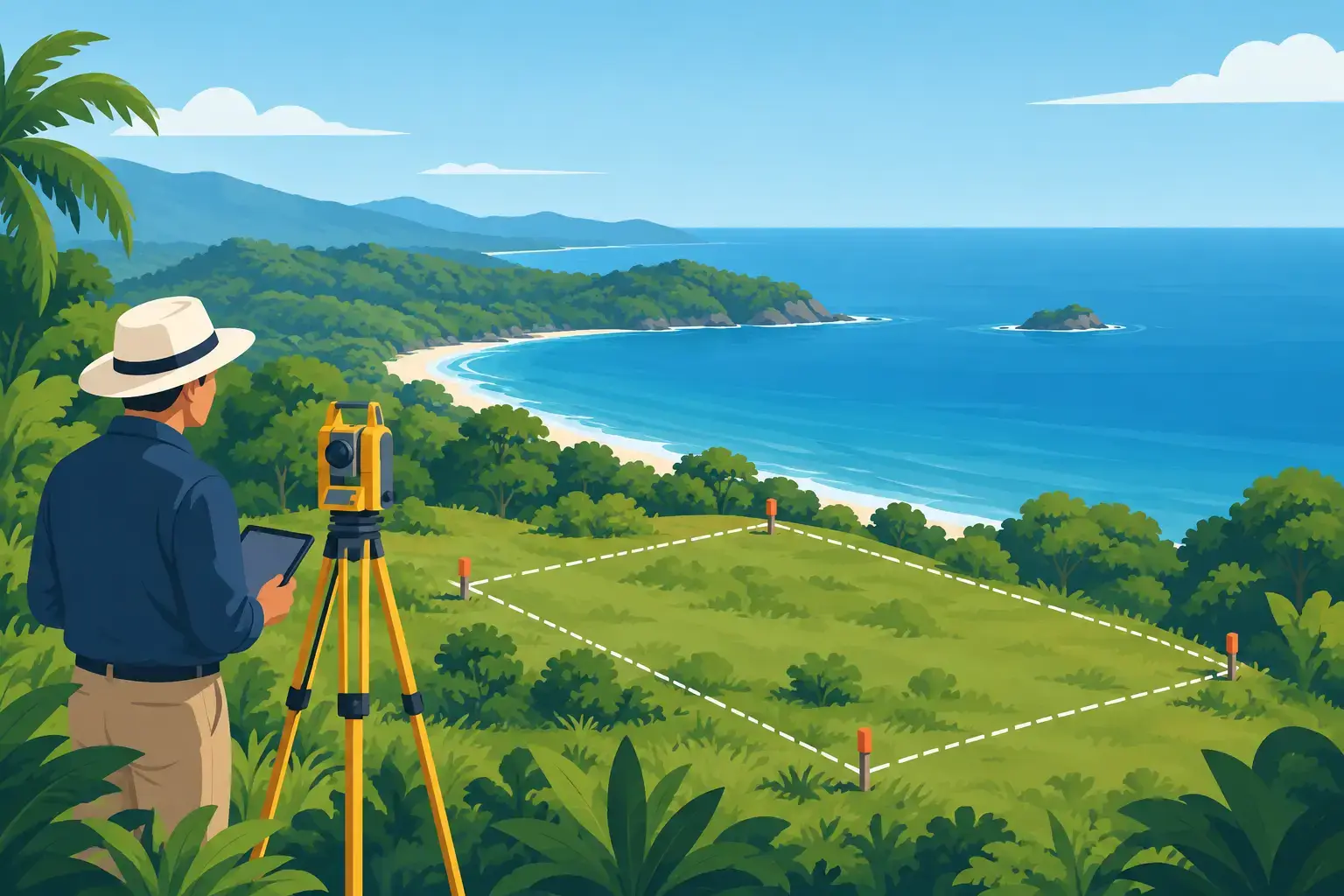
A panoramic Pacific horizon can make almost any Costa Rica lot feel exceptional at first glance. Yet a serious ocean view parcel assessment looks beyond the first sunset. It determines whether the view is protected, the land is practical to build on, and the property can support the lifestyle or investment strategy behind the purchase.
For buyers considering Manuel Antonio, Quepos, Matapalo, Uvita, Parrita, and the broader Puntarenas coast, the difference between a beautiful parcel and a remarkable investment opportunity is usually found in details that are not visible from the viewing platform. Road access, topography, utilities, water availability, drainage, neighboring development, and title history all shape the true value of an ocean-view homesite.
Start With the View, but Assess Its Staying Power
An ocean view carries real premium value, particularly in Costa Rica's luxury coastal market. However, not all views are equal, and not all will remain open over time. A distant sliver of water through mature vegetation should be valued very differently from an unobstructed, wide-angle coastline view with a sunset orientation.
Begin by identifying where the future residence, guest casita, pool terrace, and parking area would sit. The best parcel is not simply the one with the highest viewpoint. It is the one that allows an elegant home design to frame the ocean while preserving usable outdoor living space, privacy, and comfortable arrival access.
The horizon also deserves a practical review. Ask what lies between the parcel and the coast. Is it protected land, a steep ravine, established luxury homes, or undeveloped property that could eventually be sold and built upon? Local zoning and the nature of adjoining parcels help clarify risk, but no buyer should assume a view corridor is permanent without careful due diligence.
Vegetation matters as well. Costa Rica's tropical landscape is part of the appeal, but rapid growth can alter a view faster than buyers expect. A parcel may require thoughtful landscape management to preserve sightlines without compromising privacy, shade, or the property's natural character.
Ocean View Parcel Assessment: Access and Topography
On the Central and Southern Pacific coast, topography often creates the drama buyers want: elevated ridges, jungle settings, dramatic valleys, and sweeping ocean vistas. It can also introduce costs. A steep parcel may require engineered retaining walls, specialized foundation work, terraces, drainage systems, and a more complex construction plan.
That does not make a hillside lot a poor choice. In fact, some of the region's most exclusive homes are positioned on challenging terrain because the payoff is extraordinary privacy and an unparalleled view. The key is understanding whether the acquisition price leaves room for realistic site preparation and construction costs.
Access should receive the same scrutiny. A road may be technically passable during the dry season yet difficult during periods of heavy rain. Review the road's grade, surface, drainage, turning radius, and maintenance responsibility. Consider how construction vehicles, service teams, guests, and daily deliveries will reach the property.
For a luxury residence or vacation rental, easy access is often a major resale advantage. A spectacular parcel reached by an uncomfortable road can still work for the right buyer, especially one prioritizing seclusion. But it should be priced and positioned accordingly. Convenience, privacy, and view quality are all valuable, and the right balance depends on the intended use.
Usable Area Matters More Than Gross Lot Size
A large lot can be misleading if much of it is too steep, heavily forested, restricted by setbacks, or impractical for construction. Focus on the buildable envelope: the portion of the parcel where a home and supporting improvements can be placed responsibly.
A smaller lot with a generous, well-oriented building pad can be more valuable than a much larger parcel with limited usable terrain. It may also allow for a simpler construction timeline, lower grading costs, and a better relationship between the home, pool, gardens, and ocean-facing terraces.
Verify Water, Power, Internet, and Drainage Early
Premium homes need reliable infrastructure. Before presenting an offer, confirm the status of water service, electricity, internet options, and wastewater planning. These essentials influence both the property's usability and its appeal to future buyers or rental guests.
Water deserves particular attention. Depending on location, a parcel may be served by a local water association, a public provider, an existing concession, or a private well solution. Availability, connection requirements, and capacity should be verified through appropriate local professionals. A verbal assurance that water is nearby is not the same as confirmed legal service or an approved connection.
Electricity may be at the property line, farther down the road, or dependent on an extension. Internet access is increasingly critical for remote-working owners, luxury vacation rentals, and property-management operations. Fiber availability can be a differentiator, though reliable wireless and satellite options may also serve remote locations.
In tropical coastal conditions, drainage is not a minor design issue. Heavy seasonal rain needs a planned path away from structures, driveways, and slopes. Evaluate natural water flow, culverts, existing ditches, and the potential need for engineered drainage. Proper planning protects both the investment and the land below it.
Review Legal, Zoning, and Environmental Constraints
Costa Rica offers compelling opportunities for foreign buyers, but coastal land requires meticulous legal review. A qualified Costa Rican real estate attorney should verify the title, survey, boundaries, easements, access rights, liens, and any restrictions that affect intended use.
Confirm whether the parcel is titled property or subject to concession regulations. This distinction is especially relevant near the shoreline, where maritime zone rules can affect ownership structure and development rights. Never rely on listing language alone to determine what can be built.
Zoning and municipal requirements may define setbacks, height, density, permitted uses, and environmental obligations. A parcel suited for a private luxury retreat may not be suitable for a multi-villa development, boutique hotel, or commercial operation. If rental income or future development is part of the objective, assess that strategy before committing to the land.
Environmental features can be both an asset and a constraint. Mature forest, creeks, seasonal watercourses, and wildlife corridors can enhance privacy and create an exceptional setting. They may also require protective setbacks or limit where improvements can be placed. The strongest projects respect these conditions and use architecture to elevate, rather than fight, the natural terrain.
Price the Parcel for Its Full Development Picture
The purchase price is only the entry point. A sophisticated assessment considers the likely all-in cost of transforming the parcel into a finished asset. This includes design, permits, site preparation, roads, retaining, utility connections, septic or wastewater systems, landscaping, and construction.
A lower-priced ocean-view lot can become expensive if it requires extensive infrastructure. Conversely, a higher-priced parcel in a gated community or established luxury area may offer a more predictable path to construction, better security, maintained roads, and stronger resale positioning.
Comparable sales are useful, but they must be truly comparable. A ridge-top parcel in Uvita with broad Whale's Tail views is not directly interchangeable with a jungle-view homesite near Manuel Antonio, even if the acreage is similar. Location, orientation, access, neighborhood quality, infrastructure, and buildability all influence value.
For income-minded buyers, consider the guest experience from the beginning. Is the parcel close enough to beaches, restaurants, marinas, and services? Can the planned home offer privacy without feeling isolated? Does the road support arrivals after dark? Luxury rental performance often depends on these practical details as much as the view itself.
Choose a Parcel That Supports the Life You Want
A successful ocean-view land purchase should feel compelling on arrival and rational after the details are examined. The ideal parcel may be a quiet Matapalo ridge with room for a private estate, a gated homesite near Manuel Antonio with easy access to dining and beaches, or a development-ready Uvita property positioned for a signature villa collection.
Costa Rica Luxury Real Estate helps buyers evaluate premium coastal opportunities in context, matching the character of the land with personal lifestyle goals, development potential, and market realities. The right parcel does more than provide a dramatic ocean backdrop. It gives you the confidence to build something enduring, distinctive, and positioned for the future.