
Insights
Gated Versus Standalone Homes in Costa Rica
Compare gated versus standalone homes in Costa Rica, from security and services to rental potential, privacy, costs, and coastal lifestyle fit for buyers abroad.
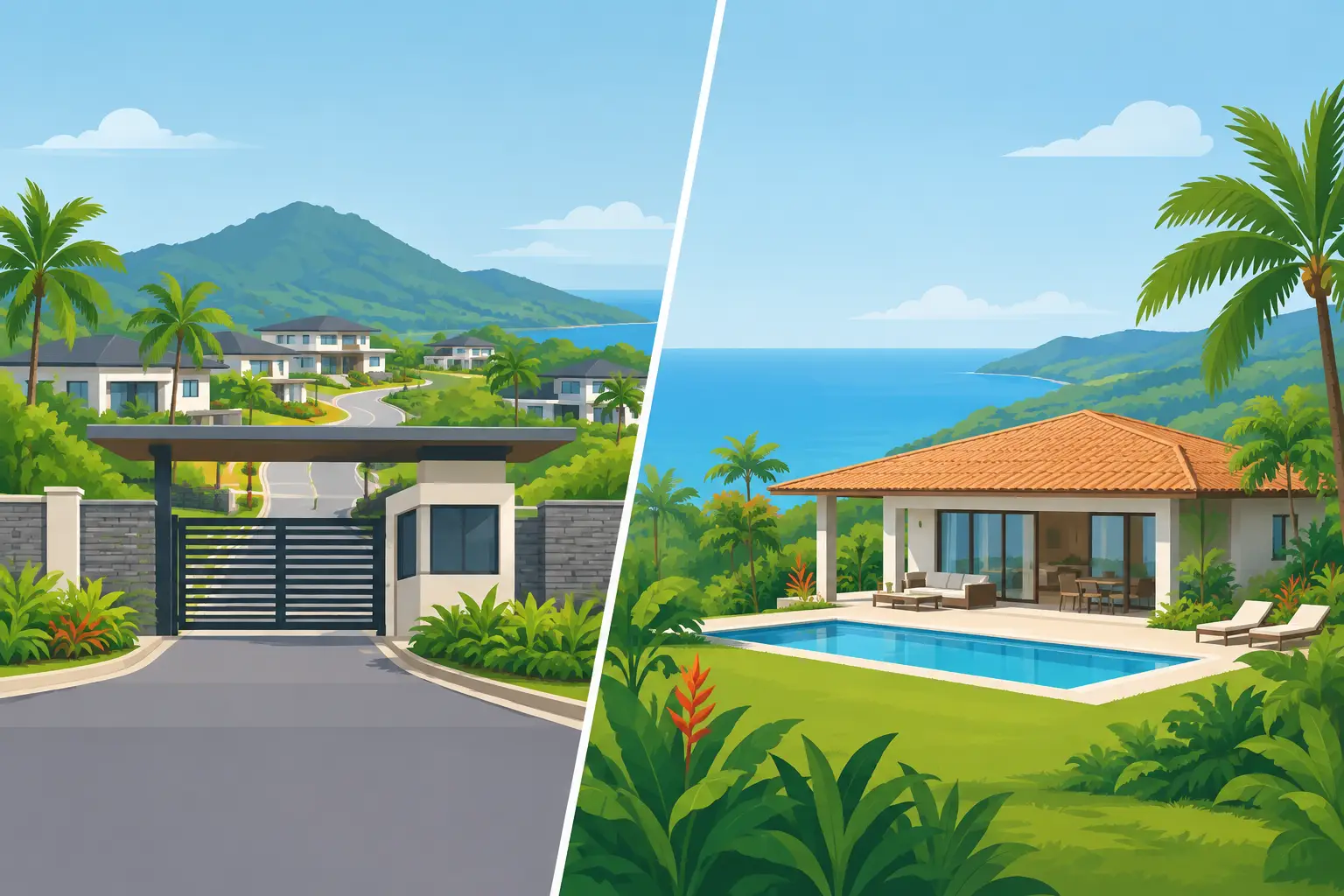
The right Costa Rican home can feel radically different depending on what happens beyond its front gate. When comparing gated versus standalone homes, buyers are not simply choosing an architectural style or a neighborhood label. They are choosing a level of privacy, operational support, rental flexibility, and day-to-day involvement that can shape both the lifestyle and the investment.
Along the Pacific coast - from Manuel Antonio and Quepos to Matapalo, Uvita, and Parrita - both options can deliver exceptional ocean views, tropical surroundings, and meaningful long-term appeal. The better choice depends on how you plan to use the property, how often you will be in Costa Rica, and what you expect from your asset while you are away.
Gated Versus Standalone Homes: The Core Difference
A gated-community residence sits within a planned development with controlled access, shared infrastructure, and an owners association. The community may include paved internal roads, security personnel, landscaping, water systems, common areas, and, in premium developments, beach clubs, fitness facilities, or concierge-style services.
A standalone home is independently situated, whether on a private hillside, a large parcel near the coast, or within a less formal residential area. It may still have gates, cameras, a caretaker residence, and sophisticated security systems, but the owner has greater responsibility for the property’s access, maintenance planning, and operations.
Neither is inherently more luxurious. Some of the region’s most remarkable estates are standalone residences positioned on expansive ocean-view land, designed for complete discretion. Equally, high-end gated communities offer polished architecture, elevated views, and the reassurance of professionally maintained surroundings. The distinction is less about prestige than control, convenience, and the type of ownership experience you prefer.
Why Buyers Choose Gated Communities
For second-home owners and international buyers, the greatest advantage of a gated community is often simplicity. Arriving after months away to maintained roads, trimmed grounds, functioning utilities, and a familiar security team has real value. This is especially compelling for owners who want Costa Rica to feel like a retreat rather than an operational project.
Controlled access can also strengthen peace of mind. Security varies from one community to another, but a quality development may offer guarded entry, patrols, perimeter systems, visitor protocols, and neighbors who share an interest in preserving the community’s standards. It is a meaningful layer of protection, though buyers should still evaluate security practices rather than relying on the word “gated” alone.
Predictable Ownership and Presentation
Homeowners association fees fund the shared elements that give a well-run development its polish. Fees may cover road upkeep, gate staffing, landscaping, lighting, common-area insurance, reserve funds, and sometimes water or internet infrastructure. The monthly expense should be examined carefully, but it can replace a range of costs and coordination tasks a standalone owner would otherwise manage separately.
For investors, consistent presentation matters. A community with clear architectural guidelines and well-maintained common areas can support buyer confidence and guest appeal. In sought-after coastal locations, that cohesion may help a property stand out in the resale market, particularly among overseas buyers who value a more familiar ownership structure.
A Strong Fit for Rental-Minded Owners
A gated home can be particularly attractive for vacation-rental use when community rules permit short-term rentals. Guests often appreciate easy arrival procedures, maintained roads, reliable parking, and a visible sense of security. For owners, on-site or nearby management support can make turnovers, maintenance calls, and guest questions easier to coordinate.
That said, association rules are decisive. Some communities restrict rental frequency, guest registration, occupancy, pets, events, or commercial activity. These restrictions may protect the residential character of the development, but they can reduce flexibility for an owner focused on maximizing rental income. Review the governing documents before treating projected rental revenue as a certainty.
Where Standalone Homes Excel
A standalone home is often the more compelling choice for buyers seeking space, independence, and a setting that feels distinctly their own. In areas with dramatic topography, such as the hills surrounding Manuel Antonio, Uvita, and the Southern Pacific coast, independent properties can offer extraordinary privacy, wider ocean panoramas, and land that is difficult to replicate within a planned community.
Standalone ownership also gives buyers more freedom to create a custom luxury retreat. You may have greater latitude to add a guest casita, expand outdoor entertaining areas, install a wellness pavilion, develop mature gardens, or shape the property around a family compound or boutique hospitality vision. Any project still requires appropriate due diligence, permits, and professional guidance, but the owner is not also navigating an association’s design review process.
Privacy That Cannot Be Manufactured
For some affluent buyers, proximity is the deciding factor. A gated neighborhood may deliver security and social connection, yet it can also mean homes are closer together, with shared roads and a more visible neighborhood rhythm. A standalone estate on substantial land provides a different luxury: silence, natural buffers, and the freedom to enjoy the pool, terrace, and sunset without feeling overlooked.
This is particularly valuable for buyers who intend to host extended family, entertain regularly, or use the home as a private escape. A properly selected independent property can offer the feeling of a remote tropical sanctuary while remaining within a practical drive of restaurants, beaches, marinas, and services.
Greater Flexibility, Greater Responsibility
The trade-off is operational. Independent homes require a clear plan for landscaping, pool care, security monitoring, road access, waste management, pest control, utilities, and preventive maintenance. Tropical conditions are beautiful but demanding. Rain, humidity, salt air, vegetation growth, and hillside drainage all reward attentive property stewardship.
This does not make a standalone property impractical for an overseas owner. It means the management structure must be intentional. Reliable local vendors, a capable caretaker or property manager, regular inspections, and a realistic maintenance reserve are essential. Costa Rica Luxury Real Estate regularly sees buyers benefit from establishing this support system before closing, not after the first repair request arrives.
Comparing the Financial Picture
The purchase price alone rarely tells the full story. Gated homes may command a premium because they offer infrastructure, access control, and a managed setting. They also carry recurring association fees, which should be assessed for both amount and value. Ask whether the association has reserves, how major repairs are approved, whether fees have risen materially, and what services are truly included.
Standalone homes can eliminate monthly association dues, but owners should budget directly for the same categories. Private security, road maintenance, landscaping, pool service, insurance, backup systems, and staffing can add up. On the other hand, a large independent parcel may carry land value and development potential that a smaller community lot cannot match.
Rental economics also vary by location and execution. A beautifully managed gated villa may appeal to guests seeking a reliable, lock-and-leave vacation experience. A one-of-a-kind standalone ocean-view estate may command higher rates because it delivers a more private and memorable stay. The right answer depends on the home’s condition, views, access, bedroom count, amenities, marketing, seasonality, and local rental regulations - not simply on whether it has a community gate.
Questions to Ask Before You Commit
A polished showing can make any property feel effortless. The stronger approach is to ask practical questions early, especially when buying from abroad. For a gated residence, request the association rules, financial statements, fee history, rental policy, meeting minutes, and details on security and infrastructure responsibility.
For a standalone home, examine legal access, road conditions, water source, drainage, internet options, utility reliability, boundary clarity, and the existing maintenance program. If the property is on a hillside or near the coast, understand the condition of retaining systems, roofs, drainage channels, and exterior materials. These details influence both ownership comfort and future marketability.
It is also wise to picture the property during your least convenient month. If you are in the United States during the rainy season, who responds to a downed branch, a pool equipment alert, or a guest issue? If you arrive late at night, how easy is access? If you decide to sell in five years, which buyer profile is most likely to value the property? The answers often clarify the right direction quickly.
Choosing the Home That Matches Your Costa Rica Plan
Choose a gated residence if you value managed surroundings, established infrastructure, controlled entry, and a more turnkey ownership model. It is often an excellent fit for buyers who will visit periodically, prefer predictable operations, or want a rental property with broad guest appeal.
Choose a standalone home if privacy, acreage, design freedom, and an irreplaceable setting are the priorities. It can be the superior option for buyers who want a signature estate, plan to personalize extensively, or see long-term value in land and exclusivity.
The most rewarding Costa Rica property is not defined by a gate or the absence of one. It is the residence that lets you enjoy the coast with confidence, while supporting the lifestyle and investment strategy that brought you here.