
Insights
Freehold Versus Concession Property in Costa Rica
Compare freehold versus concession property in Costa Rica, from ownership rights and coastal rules to due diligence for luxury buyers and investors alike.
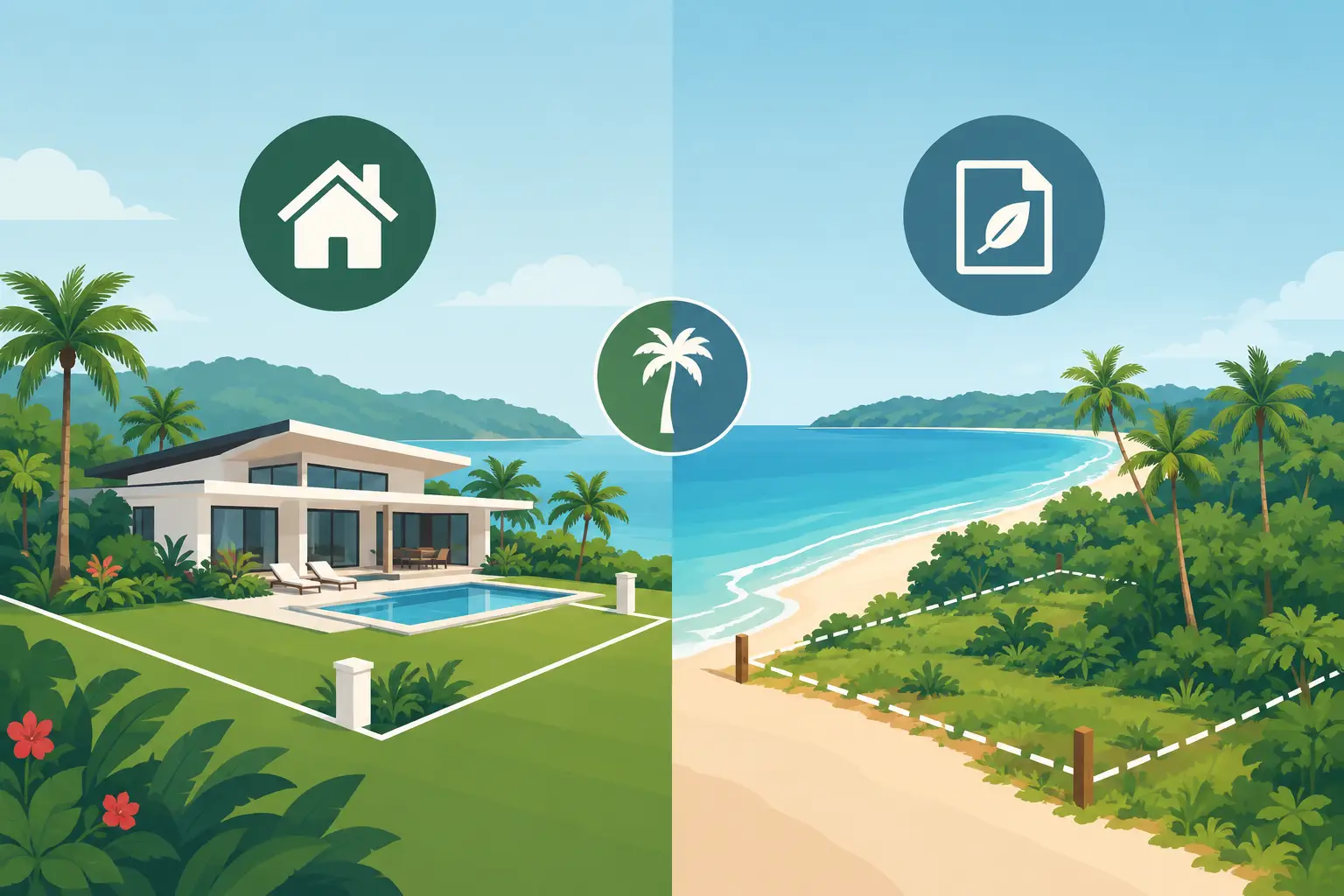
A dramatic Pacific view can make any coastal property feel like a once-in-a-lifetime acquisition. Before evaluating the architecture, rental potential, or sunset terrace, however, discerning buyers must understand one foundational distinction: freehold versus concession property. In Costa Rica, the ownership structure behind a residence, resort site, or oceanfront parcel can shape its value, financing options, operating strategy, and long-term exit plan.
For luxury buyers considering Manuel Antonio, Quepos, Matapalo, Uvita, Parrita, and the broader Puntarenas coast, this is not merely a legal technicality. It is a central part of making an intelligent acquisition. Both structures can present remarkable lifestyle and investment opportunities, but they are not interchangeable.
Freehold Versus Concession Property: The Core Difference
Freehold property is titled real estate. The buyer acquires ownership of the land and any improvements, with title recorded in Costa Rica's National Registry. This is the ownership model most US buyers recognize. A freehold owner may hold property personally or through a Costa Rican corporation, subject to the standard legal, tax, and corporate considerations that apply to the transaction.
Concession property, by contrast, generally involves the right to use and occupy land located within Costa Rica's Maritime Terrestrial Zone, known locally as the ZMT. The concession holder does not own the underlying land. Instead, the municipality grants a contractual right to use a defined area for a specified period, subject to the terms of the concession and applicable regulations.
That distinction matters most along the coast. Costa Rica's coastline includes some of the country's most coveted real estate, from secluded jungle-framed beaches to resort-ready waterfront parcels. It also has a legal framework intended to protect public access and guide coastal development.
How Costa Rica's Maritime Zone Works
As a general rule, the Maritime Terrestrial Zone extends 200 meters inland from the ordinary high-tide line. The first 50 meters are the public zone. This area is for public use and cannot be privately owned or concessioned for exclusive development.
The next 150 meters are generally known as the restricted zone. Land in this area may be subject to a concession, provided that an approved zoning plan and the relevant municipal and governmental approvals are in place. Not every shoreline follows this exact framework. Certain historically established urban areas, islands, and properties subject to special laws may be treated differently. A property described as oceanfront should never be assumed to be concession land or titled land based on location alone.
A quality coastal review starts with the survey, registry information, municipal records, zoning designation, and the precise physical relationship of the parcel to the high-tide line. The view may be priceless, but the legal map comes first.
What Freehold Ownership Offers Luxury Buyers
Freehold ownership typically provides the greatest degree of permanence and flexibility. The owner holds registered title, can sell the property, pass it through an estate plan, lease it, improve it within zoning rules, or use it as collateral where lender requirements are met.
For a buyer seeking a private ocean-view villa in Manuel Antonio, a gated residence near Uvita, or a development parcel outside the Maritime Zone, titled land can be especially appealing. It often offers a clearer path for long-term family ownership, resale marketing, and institutional-grade due diligence.
Freehold does not mean risk-free. Costa Rica's property market requires careful review of title history, boundary surveys, access rights, water availability, environmental restrictions, construction permits, corporate standing, and any liens or easements. Yet the ownership interest itself is generally more familiar to international buyers and may attract a broader resale audience.
For investment-minded purchasers, titled property can also create more flexibility when repositioning an asset. A luxury home may become a vacation rental, a multi-acre site may be developed in phases, or a commercial holding may be sold as part of a larger hospitality strategy, assuming all local regulations and permits support the intended use.
What a Coastal Concession Can Offer
A properly structured concession can provide access to an exceptional coastal setting that may not otherwise be available for private acquisition. For certain hospitality operators, restaurateurs, boutique resort investors, and buyers who place a premium on direct beachfront positioning, the concession model can be compelling.
Concessions are typically granted for a fixed term, commonly up to 20 years, and may be renewable if the holder remains in compliance and the governing authorities approve the renewal. The concession agreement defines the authorized use, the area covered, financial obligations, and development conditions. Annual fees, municipal requirements, and limitations on construction or use are part of the ownership equation.
The opportunity is not simply to control beachfront land. It is to control it responsibly, within a regulated framework. A well-documented concession with an established operating history, approved plans, compliant improvements, and a clear renewal path can be valuable. It can support a distinctive hospitality concept or an income-producing asset with a coastal location that is difficult to replicate.
However, buyers should understand that a concession is a more specialized interest than freehold title. The market for resale may be narrower. Financing may be more complicated. The transfer process requires added attention. The right to use the property depends on compliance, government approvals, and the continuing validity of the concession.
Foreign Ownership Considerations
Foreigners can own titled Costa Rican real estate, including through a properly structured Costa Rican corporation. Concession holdings require more careful analysis. Under Costa Rica's Maritime Zone rules, foreign participation in a concession-holding entity may be restricted, often requiring Costa Rican ownership or control participation. The applicable structure depends on the property, concession terms, local authority requirements, and current legal interpretation.
This is an area where informal assurances are not enough. A buyer should retain an independent Costa Rican real estate attorney with specific experience in Maritime Zone transactions. The attorney should review not only the concession document but also the concession holder's corporate structure, municipal approvals, payment history, zoning plan, use permits, and whether the contemplated transfer is legally permitted.
For affluent buyers, the right advisory team is part of the asset. A skilled broker can identify the property and frame the opportunity; qualified legal, survey, tax, and environmental professionals confirm whether the opportunity is ready for acquisition.
Due Diligence That Matches the Asset
Whether a property is titled or concessioned, premium coastal real estate deserves a premium due diligence process. The more irreplaceable the setting, the less appropriate it is to rely on assumptions.
For freehold property, buyers should confirm the registered owner, title history, cadastral survey, boundaries, legal access, liens, encumbrances, zoning, utilities, water source, environmental conditions, construction permits, and any rental or homeowners' association obligations. If the asset is intended as a vacation rental or boutique lodging business, verify that its operating history and permits align with the planned use.
For a concession, the review must go further. Confirm the concession's term, holder, permitted use, concession boundaries, annual payment status, compliance history, approved zoning plan, transfer procedure, renewal conditions, and the status of every building or improvement on the site. A beautiful beach club, villa, or lodge is only as secure as the rights supporting it.
Buyers should also ask practical questions that affect daily enjoyment and revenue. Is the access road reliable in the rainy season? Is water legally available for current and future use? Are there setbacks, conservation restrictions, or coastal erosion considerations? Does the property have the infrastructure to support a high-end rental operation, staff quarters, or expansion plans?
Which Structure Is Right for Your Goals?
Freehold property is often the preferred choice for buyers prioritizing long-term control, legacy ownership, financing flexibility, and a broad future resale market. It is particularly well suited to private villas, second homes, ocean-view estates, gated community residences, and development-ready land located outside the restricted maritime area.
Concession property can be appropriate for sophisticated buyers who understand the framework and see distinctive value in a beachfront location, hospitality operation, or established commercial use. The key is to price the asset according to its actual legal interest, remaining term, compliance position, and transferability - not simply according to the view.
There is no universal winner in the freehold versus concession property decision. The right structure depends on how you plan to use the asset, how long you expect to hold it, whether income production is central to the strategy, and how much regulatory complexity you are prepared to manage.
Costa Rica's Pacific coast rewards buyers who look beyond the listing photographs and assess the complete asset: location, legal rights, infrastructure, operating potential, and future marketability. With the proper structure and professional guidance, a remarkable coastal property can become far more than a retreat - it can be a carefully positioned part of a global real estate portfolio.