
Insights
How to Avoid Cross Border Wire Fraud in Costa Rica
Learn how to avoid cross border wire fraud when buying Costa Rica real estate, with verified instructions, secure closings, and informed decisions abroad.
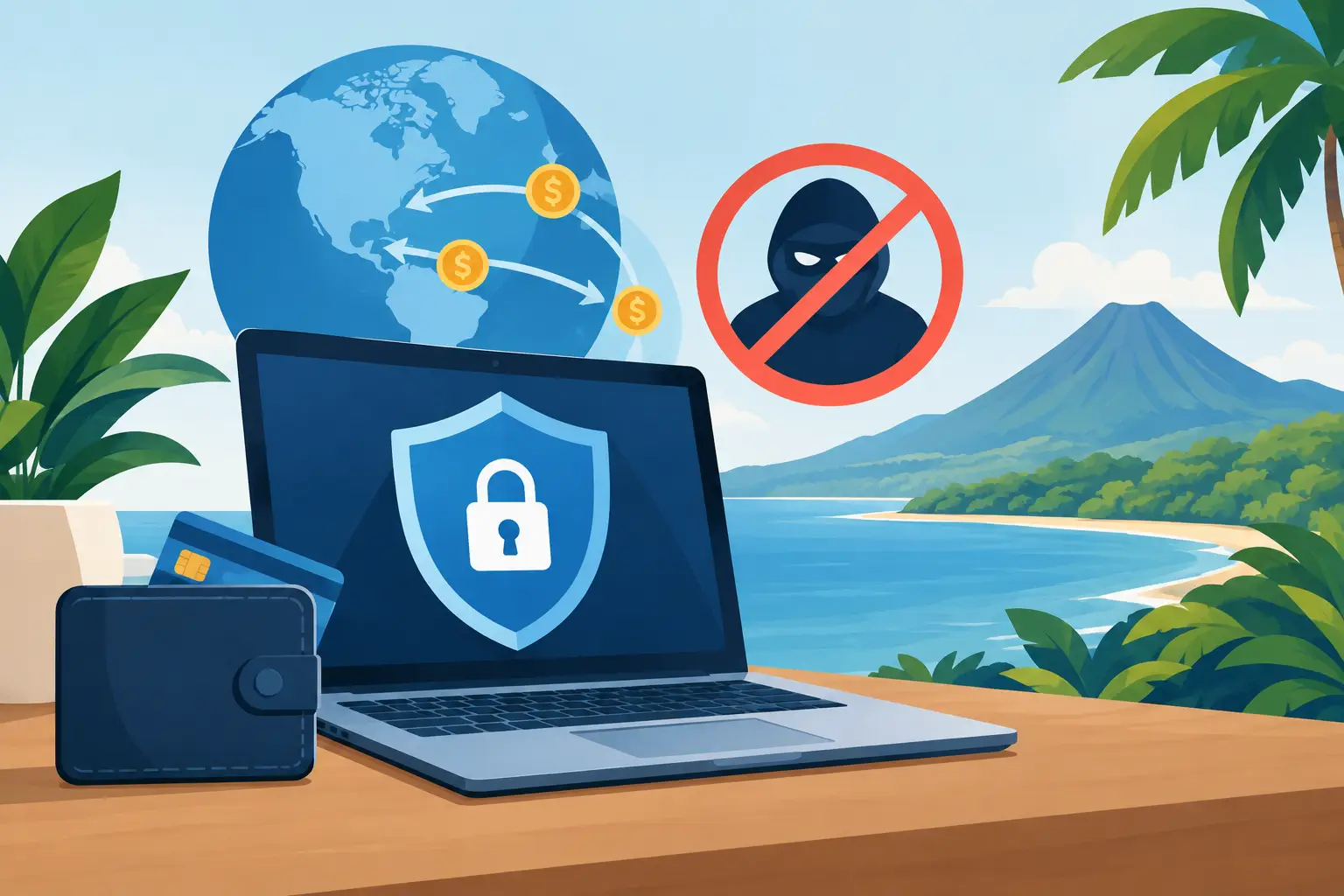
A wire transfer for a Costa Rica villa, ocean-view condominium, or development parcel can represent one of the largest financial decisions a buyer will make abroad. That is precisely why knowing how to avoid cross border wire fraud belongs alongside due diligence on title, zoning, inspections, and rental potential. Fraudsters do not need to compromise an entire transaction to cause damage. A convincing email, an altered payment instruction, and a buyer rushing to meet a closing deadline may be enough.
For luxury buyers and investors, the objective is not to become suspicious of every professional involved in a transaction. It is to establish a disciplined payment process that cannot be redirected by a forged message or an unverified change in banking details.
Why Costa Rica Buyers Are Attractive Targets
Cross-border real estate purchases carry conditions that criminals exploit: unfamiliar banking systems, different closing customs, large transfer amounts, and buyers coordinating from another country. A purchaser may be reviewing documents from the United States while the seller, attorney, escrow provider, property manager, and broker are all communicating from Costa Rica.
That distance can create false urgency. An email may claim that a seller is traveling, a bank account has changed, or a wire must arrive immediately to preserve a reservation or meet a closing date. The message may look authentic, using a similar email address, copied signatures, property details, and even familiar names from the transaction.
Premium properties can be particularly attractive targets because the deposit or closing balance is substantial. Whether you are acquiring a private Manuel Antonio retreat, a hospitality asset near Uvita, or a land holding in the broader Puntarenas region, the amount and destination of each transfer deserve the same care as the asset itself.
The Core Rule to Avoid Cross Border Wire Fraud
Never rely on an email, text message, or messaging app as the sole authority for wire instructions or a change to them. This is the rule that prevents the most expensive errors.
Before sending funds, independently confirm the beneficiary name, bank name, account number, international routing details, currency, and transfer purpose by telephone. Use a number obtained from a trusted original source, such as the engagement letter, an established professional website, or contact information you verified at the outset. Do not call the phone number included in a last-minute email requesting revised instructions.
The person confirming instructions should be an authorized representative of the law firm, escrow provider, or other legitimate recipient. Ask them to read the banking details to you rather than simply confirm that the details you received are correct. A fraudster who has accessed an inbox may be able to respond to an email chain, but they should not be able to pass an independent verification call.
Build a Payment Map Before Money Moves
A well-managed purchase should have a clear money trail long before closing. Ask your legal and transaction team to explain, in writing, who will receive each payment, why they will receive it, and under what conditions it will be released.
For example, the initial reservation deposit may go to a designated escrow arrangement or another agreed recipient. A later payment may be handled through the closing attorney or escrow provider after specified legal conditions are satisfied. The appropriate structure depends on the transaction, the parties, the property type, and the services being used. What matters is that the structure is defined early, documented clearly, and not casually altered mid-transaction.
A payment map should identify the legal name of the recipient, the expected currency, the amount, the date range, and the supporting document for each transfer. It should also distinguish between a purchase deposit, professional fees, taxes, and any costs associated with a corporate ownership structure. Vague instructions such as “send the balance to our new account” should stop the process until independently verified.
Confirm the recipient and the reason
A legitimate wire is not made safer simply because the account is held at a recognized bank. The beneficiary must make sense in the context of the signed agreement and closing structure. If funds are intended for escrow, ask who controls release authority and what documentation governs that release. If funds are being sent directly to a seller, understand why that arrangement is appropriate and what protections are in place.
For sophisticated buyers, this is not an inconvenience. It is transaction discipline. The same attention used to evaluate ocean views, access roads, title history, and vacation rental income should apply to the final destination of capital.
Treat Changed Instructions as a Security Event
Real estate closings can evolve, but bank instructions rarely need to change without a clear, credible explanation. Any revised account number, beneficiary, bank location, or currency direction should be treated as a security event rather than a routine administrative update.
Pause the transfer. Call independently verified contacts at your attorney’s office and the intended recipient institution. Then request a written explanation of the change and compare it against the transaction documents. If a party pressures you to skip verification because the deadline is close, that pressure is itself a warning sign.
Do not assume a familiar email thread is safe. Business email compromise often works by monitoring a genuine conversation and intervening at the moment funds are expected. Watch for small differences in email domains, unusual spelling, unexpected tone, new urgency, or replies that discourage a phone call. A message from “companyname.com” and one from “cornpanyname.com” can look nearly identical when viewed quickly on a phone.
Use Your Bank as a Second Line of Defense
Your sending bank can be a valuable control, especially when it understands that you are wiring funds for an international property acquisition. Tell the bank in advance about the expected amount, destination country, recipient, and timing. This reduces the chance that a legitimate transfer is delayed while also giving the bank context if the request deviates sharply from prior instructions.
Ask the bank what verification it performs for international wires and whether the beneficiary information must match the receiving account exactly. Bank procedures vary, and an international transfer can be difficult or impossible to recover after it is credited. Confirm cut-off times, foreign exchange charges, intermediary bank fees, and whether the recipient must receive a precise net amount.
A small test wire can be sensible in some circumstances, particularly when a new escrow relationship is involved. It is not a universal requirement, and it can create timing complications near closing. But when the transaction timeline allows, a test transfer followed by independent confirmation of receipt offers an additional checkpoint before the full balance is sent.
Keep Communications Deliberate and Private
Do not discuss bank details, passport information, account balances, or signed closing documents on public Wi-Fi or through shared devices. Use strong, unique passwords and multi-factor authentication for the email account connected to your purchase. Your email is often the gateway to the entire transaction.
It is also wise to establish a verbal passphrase with your legal team or a defined procedure for confirming banking changes. A simple pre-arranged protocol can make an impersonation attempt far easier to identify. The best process is one all decision-makers understand, including spouses, business partners, family offices, and anyone authorized to release funds.
If your purchase is being made through a U.S. entity, retirement structure, trust, or Costa Rican corporation, make sure the people with signing authority understand the same verification rules. Sophisticated ownership structures can add valuable planning benefits, but they also add participants and communication paths that should be tightly coordinated.
If You Suspect Fraud, Act Immediately
If you have sent a wire and later suspect the instructions were fraudulent, contact your sending bank’s fraud department at once. Request a recall or trace of the transfer and document the time, recipient details, and every party contacted. Notify your attorney, the intended escrow provider or seller, and relevant financial institutions through independently verified channels.
Speed matters. Do not spend hours trying to determine whether the suspicious email was genuine before alerting the bank. Preserve emails, message headers, wire confirmations, and call records. Your bank may need these details to initiate recovery efforts or coordinate with correspondent banks.
A Luxury Purchase Deserves a Controlled Closing
Costa Rica offers remarkable opportunities for buyers seeking privacy, natural beauty, rental appeal, and geographic diversification. A hillside estate overlooking the Pacific or an income-producing coastal property should be acquired with the calm assurance that comes from a controlled process, not a rushed wire sent on trust alone.
At Costa Rica Luxury Real Estate, we encourage buyers to ask direct questions, verify every financial instruction independently, and keep experienced legal and banking professionals involved through closing. The right property can be extraordinary. The path to ownership should be equally well protected.